
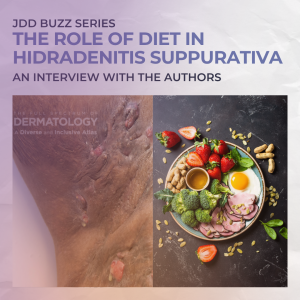
A review in the Journal of Drugs in Dermatology highlights diet as a promising adjunct in hidradenitis suppurativa (HS) management, with emerging evidence that targeted dietary changes may reduce inflammation and disease severity.
In this interview with Next Steps in Derm, the study’s authors outline the main takeaway: Several dietary strategies may benefit some patients. Avoiding dairy and brewer’s yeast has been associated with symptom improvement, likely by reducing hormonal and immune triggers linked to follicular plugging and inflammation. Diets that lower systemic inflammation—such as the Mediterranean diet and very-low-calorie ketogenic diet—have shown encouraging results in small studies. Limiting leucine-rich foods (e.g., meat, eggs, and dairy) may also help by reducing mTOR-driven pathways involved in HS lesion formation.
Addressing micronutrient deficiencies is another low-risk strategy. Supplementation with vitamin D or zinc in deficient patients has produced clinical improvement in some cases. In addition, intermittent fasting, including Ramadan-style fasting, has been associated with reduced inflammatory markers and lesion severity in a subset of patients.
Although most studies are small and further research is needed, the findings support diet as a personalized, noninvasive adjunct to medical therapy. Clinicians should move beyond general advice and consider discussing specific dietary patterns—such as Mediterranean, dairy-free, or brewer’s yeast–free approaches—with patients seeking to optimize HS control or reduce reliance on systemic medications.
