Monthly Archives

January 2026

Psoriasis and Psoriatic Arthritis in Patients With Skin of Color

By Medical Dermatology

psoriasis and psoriatic arthritis in skin of color

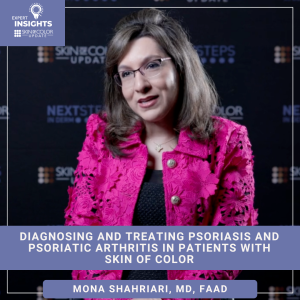
Psoriasis doesn’t look the same on every skin tone—and recognizing that matters. Dr. Mona Shahriari, associate clinical professor of dermatology at Yale University School of Medicine, encourages clinicians to broaden their psoriasis color palette to improve diagnosis and care of psoriasis and psoriatic arthritis in skin of color.

In a video interview with Next Steps in Derm, Dr. Shahriari shares:

  • Key clues for diagnosing psoriasis in skin of color
  • The clinical domains of psoriatic arthritis and how early recognition can reduce diagnostic and treatment delays
  • Research insights on scalp psoriasis
  • How pigmentary sequelae impact quality of life

This is a must-watch for clinicians committed to more equitable care of psoriasis and psoriatic arthritis in skin of color.

Be on the lookout for more video interviews with Skin of Color Update faculty that will be posted to the blog in the coming months.

Recent Dermatology Drug Approvals: SOCU in the News

By Medical Dermatology

recent dermatology drug approvals

Dermatologists have an increasing number of FDA-approved drugs at their disposal, including therapeutics for patients with skin of color. In an article by the American Journal of Managed Care, Skin of Color Update Conference Co-Chair Andrew F. Alexis, MD, FAAD, gave an update on recent drug approvals in dermatology, including atopic dermatitis (AD), hidradenitis suppurativa, and plaque psoriasis.

The article, which covered Dr. Alexis’s Skin of Color Update session on recent drug approvals, highlighted the approval of tapinarof cream 1% for AD in patients age 2 and older. In the phase 3 ADORING trials, nearly half of treated patients achieved clear or almost clear skin by week 8, with durable, treatment-free intervals observed in longer-term data. Importantly, efficacy and safety were consistent across racial and ethnic subgroups.

Other newly approved topical therapies include roflumilast foam for plaque psoriasis, delgocitinib cream as the first steroid-free topical JAK inhibitor for chronic hand eczema in adults, and ruxolitinib cream for moderate AD in young children, all demonstrating statistically significant improvements versus vehicle and good tolerability, including in diverse patient populations.

The article also covered advances in biologics. Lebrikizumab, an IL-13 inhibitor for moderate-to-severe AD, showed durable skin clearance and improvements in hyperpigmentation. Nemolizumab, targeting the IL-31 receptor, improved skin clearance in AD when combined with topical therapies. For HS, bimekizumab demonstrated sustained efficacy through 48 weeks. Additionally, dupilumab received new approvals for chronic spontaneous urticaria and bullous pemphigoid, marking major progress for conditions with historically limited treatment options.

Dr. Alexis is quoted as saying it was an “extraordinary year” in dermatology. The new therapies are already influencing clinical practice and appearing in clinical guidelines, resulting in meaningful advances for conditions that disproportionately affect patients with skin of color.
Insurance Coverage of Hair Loss Treatments: JDD Buzz

By Medical Dermatology

insurance coverage of hair loss treatments

Hair loss treatments are in demand in 2026, including by patients of color. Dermatologists have a robust toolbox of prescription therapies, yet with any remedy in dermatology, insurance coverage is crucial for adherence. Unfortunately, insurers often deem hair loss therapies cosmetic despite their quality of life impact. Without insurance coverage of hair loss treatments, patients must decide if they’re willing to make financial sacrifices to regrow hair and improve their self-esteem.

A recent Journal of Drugs in Dermatology editorial analyzes insurance coverage of hair loss treatments and the impact on patients, including the underserved. In a Next Steps in Derm Commentary, author Kimberly S. Salkey, MD, shares her analysis of coverage by the top five largest health insurance companies by number of insured members. Dr. Salkey brings attention to this treatment barrier and provides tips for helping patients gain access when insurance coverage is denied.

Alopecia Care for Head-Covering Women

By Medical Dermatology

head-covering women

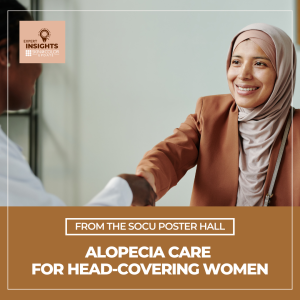
For head-covering women, hair loss can have profound psychosocial, cultural, and spiritual consequences. In fact, emotional distress and fear of feeling exposed can lead these women to delay care. A poster presented at Skin of Color Update shares the experiences of head-covering women with alopecia and how dermatology should adapt to provide more respectful care.

The poster outlines how hair loss in women who wear head coverings is not simply a medical issue. Through qualitative studies, patient narratives, and dermatologic literature, the authors reveal what happens when a person’s hair loss is hidden from public view.  Head-covering women still experience grief, anxiety, and fear of stigma at the loss of hair. Barriers to care commonly include discomfort uncovering hair, lack of privacy, unease with male clinicians, and concerns about clinical photography.

The poster also outlines strategies that can improve care. These strategies include offering same-gender examiners, ensuring private exam spaces, clearly communicating each step of the visit, and respecting patient preferences around modesty and documentation. The poster authors contend that dermatology clinicians should acknowledge the religious and emotional significance of hair and adopt more culturally responsive practices. As such, dermatology clinicians can build trust and reduce delays in diagnosis, which in turn, lead to more compassionate, effective alopecia care.

For an interview with the poster’s lead author, read this Next Steps in Derm commentary.