Tag

skin of color update

Vulvar Dermatoses: From the SOCU Poster Hall

By Uncategorized

vulvar dermatoses

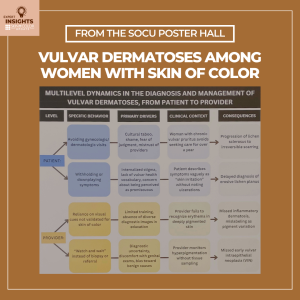
Vulvar dermatoses are often underdiagnosed in women with skin of color. Cultural stigma, structural and educational barriers, and gaps in research and clinical training all play a role in limiting care. Patients may self-manage symptoms and only seek care when the disease becomes severe. Once they seek care, they may experience gaps in clinician understanding and recognition of the severity of the disease and its quality of life impacts. These clinical barriers may lead to undertreatment.

A poster presented at Skin of Color Update examined these challenges and highlighted the need for more equitable, culturally informed approaches to vulvar dermatoses. In this Next Steps in Derm commentary, lead author Grace Herrick shares the results of a comprehensive narrative review that identified challenges and barriers to care, including the experience of shame. She also outlines a paradigm shift in how dermatology clinicians should approach vulvar health in populations that have been historically marginalized.

Hidradenitis Suppurativa in Patients with Skin of Color

By Sessions

hidradenitis suppurativa

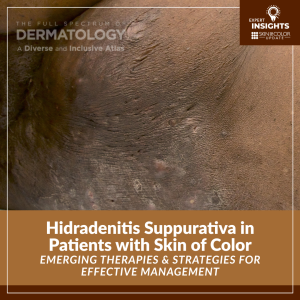
Hidradenitis suppurativa (HS) is one of the most difficult-to-treat, chronic inflammatory diseases in dermatology, particularly for patients with skin of color. At Skin of Color Update, Tiffany Mayo, MD, led a case-based discussion highlighting earlier recognition, holistic management, and existing and emerging therapies for HS. She emphasized a simple, highly sensitive screening question to reduce diagnostic delays, which currently average 7–10 years, and reviewed the complex immunologic pathogenesis and systemic comorbidities associated with HS.

This session summary outlines practical takeaways, including the importance of reducing patient stigma by reframing misconceptions about causation, while setting realistic expectations — HS is a chronic, noninfectious disease requiring long-term management. Updated U.S. and European guidelines now support a structured, severity-based approach to treatment, incorporating both flare management and maintenance care. Dr. Mayo’s session emphasized holistic, patient-centered care and emerging therapies that can help reduce delays and improve outcomes.

Psoriasis and Psoriatic Arthritis in Patients With Skin of Color

By Medical Dermatology

psoriasis and psoriatic arthritis in skin of color

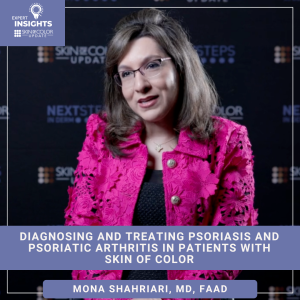
Psoriasis doesn’t look the same on every skin tone—and recognizing that matters. Dr. Mona Shahriari, associate clinical professor of dermatology at Yale University School of Medicine, encourages clinicians to broaden their psoriasis color palette to improve diagnosis and care of psoriasis and psoriatic arthritis in skin of color.

In a video interview with Next Steps in Derm, Dr. Shahriari shares:

  • Key clues for diagnosing psoriasis in skin of color
  • The clinical domains of psoriatic arthritis and how early recognition can reduce diagnostic and treatment delays
  • Research insights on scalp psoriasis
  • How pigmentary sequelae impact quality of life

This is a must-watch for clinicians committed to more equitable care of psoriasis and psoriatic arthritis in skin of color.

Be on the lookout for more video interviews with Skin of Color Update faculty that will be posted to the blog in the coming months.

SOCU in the News: GLP-1 Agonists and Other Approaches

By Media Coverage

GLP-1 agonists

One of the most novel sessions at Skin of Color Update was a panel on the use of GLP-1 agonists and other multidisciplinary approaches in addressing the comorbidities associated with psoriasis and hidradenitis suppurativa. The American Journal of Managed Care wrote an article on the session, which discussed the relationship between obesity and inflammatory skin conditions.

Jennifer Soung, MD, FAAD, pointed out that adipose tissue is an active endocrine organ that releases cytokines that increase inflammation in the body. As outlined in the article, Dr. Soung noted the connection between obesity and psoriatic arthritis is strong as research has shown body mass index is related to the risk of psoriatic arthritis. Dr. Soung also stated that obesity may decrease biologic response.

Karan Lal, DO, MS, FAAD, addressed the systemic factors at play in hidradenitis suppurativa, and that dermatologists often become de-facto primary care providers for these patients. He outlined his approach for an initial office visit for the condition.

Both panelists also covered how to approach patients about their weight, including the value of asking for permission. Dr. Soung noted terminology to use that is more patient friendly. Drs. Soung and Lal shared current research on the impact of GLP-1 agonists on reducing disease severity and comorbidities as well as a potential direct anti-inflammatory effect.

Both Drs. Soung and Lal expressed the value of an interdisciplinary team, and encouraged dermatologists, if uncomfortable in prescribing GLP-1 agonists, to build referral relationships with physicians who address weight management.

Our sister conference, the ODAC Dermatology Conference, is continuing the GLP-1 conversation with a panel discussion that addresses safety of these medications, their impact on comorbidities, as well as aesthetic considerations. Dr. Soung will participate in the panel along with Dr. Steven Daveluy, Dr. Sarah Jackson, and ODAC Conference Co-Chair Dr. Adam Friedman. ODAC takes place in Orlando, January 16-19. Register today!

SOCU in the News: Dr. Battle’s Career Insights

By Media Coverage

skin of color dermatology

Skin of Color Update co-chair Eliot F. Battle, MD, was featured in an American Journal of Managed Care article that outlined some of Dr. Battle’s career insights in skin of color dermatology. He shared those insights in his Skin of Color Update session on using lasers and energy-based devices in patients with darker skin tones.

Dr. Battle tells how skin of color dermatology has changed since he became a dermatologist, and gives his insight into the future. In the article, Dr. Battle reveals how he’s grown his practice in Washington, D.C., by treating conservatively and seeing each patient as an individual. Dr. Battle outlines the safety and effectiveness of various lasers and energy-based devices in patients with darker skin tones. He also encourages dermatologists to become an expert on their devices and to treat more conservatively than manufacturers’ parameters.

Dr. Heather Woolery-Lloyd Joins SOCU Advisory Team

By Skin of Color Update Agenda

Dr. Heather Woolery-Lloyd

Heather Woolery-Lloyd, MD, FAAD, has been named Skin of Color Update’s program development advisor. Dr. Woolery-Lloyd is a frequent lecturer at Skin of Color Update and director of the Skin of Color Division for the University of Miami Dr. Phillip Frost Department of Dermatology and Cutaneous Surgery.

“It is a true honor to be asked to serve as a program development advisor for Skin of Color Update,” Dr. Woolery-Lloyd says. “Skin of Color Update has long been a go-to resource for me and so many of my colleagues. I’ve been consistently impressed by this meeting’s ability to keep clinicians up to date on the latest in skin of color dermatology. I’m excited to have the opportunity to lend my expertise and help shape what is sure to be another successful and exciting year.”

Dr. Woolery-Lloyd will join Skin of Color Update founders and conference co-chairs Andrew F. Alexis, MD, MPH, FAAD, and Eliot F. Battle, MD, in planning the 2026 conference, which will be held October 9-11 at the New York Hilton Midtown. 

“I have had the pleasure of collaborating with Dr. Woolery-Lloyd for many years, and she has been one of our top speakers at Skin of Color Update since its inception,” Dr. Alexis says. “She brings extensive clinical and research experience in the field and is a passionate educator. I look forward to continuing to develop innovative, practical educational content with her and my co-chair, Dr. Eliot Battle.”

“Dr. Woolery-Lloyd’s expertise in skin of color dermatology, her ongoing contributions to the field, and her unwavering commitment to the Skin of Color Update conference make her an ideal addition as we work to shape a forward-thinking, clinically relevant and impactful educational program,” Dr. Battle says.

SOCU Faculty Research: Thiamidol for Hyperpigmentation

By Skin of Color Update Agenda

hyperpigmentation

Skin of Color Update faculty are experts in skin of color dermatology. Eight faculty members were involved with this recent Journal of Drugs in Dermatology article on Thiamidol as a treatment for hyperpigmentation.

Drs. Cheri Frey, Pearl Grimes, Valerie Callender, Andrew Alexis, Hilary Baldwin, Nada Elbuluk, Susan Taylor, and Seemal Desai conducted the review of pre-clinical and clinical safety and efficacy data of Thiamidol formulations. Thiamidol or isobutylamido thiazolyl resorcinol, has been identified as the most effective human tyrosinase inhibitor out of 50,000 compounds screened. The researchers wrote that Thiamidol appears to be safe and effective and should be considered when recommending over-the-counter treatment options to patients with hyperpigmentation.

For the latest research and updates in the treatment of hyperpigmentation, attend Skin of Color Update. Register today!

SOCU Faculty in the News: Dr. Karan Lal

By Skin of Color Update Agenda

pediatric psoriasis

Skin of Color Update faculty member Karan Lal, DO, FAAD, wrote the August cover story for Dermatology Times on the hidden burdens of pediatric psoriasis.

In the article, Dr. Lal addresses the need for early intervention and awareness of systemic comorbidities linked to pediatric psoriasis, including uveitis, arthritis, obesity, type 2 diabetes (T2D), and metabolic syndrome. Dr. Lal also comments on  available therapies and treatment obstacles in this patient population.

Dr. Lal will participate in an expert discussion at Skin of Color Update on addressing comorbidities in dermatologic disorders, including psoriasis and hidradenitis suppurativa. This discussion will also address the potential role of GLP-1 agonists. In addition, Dr. Lal will present on pediatric dermatology pearls for treating patients with skin of color.

Register for Skin of Color Update and attend lectures by premier experts in dermatology on topics that impact your patients.

JDD Video Abstract with Dr. Cheri Frey

By Aesthetic Dermatology

pre-aging

Skin of Color Update faculty member Cheri Frey, MD, FAAD, recently shared a video abstract of her Journal of Drugs in Dermatology study evaluating the benefits of acetyl dipeptide-31 amide (AP31) for pre-aging skin.

Watch as Dr. Frey outlines the signs of pre-aging and the goal of prejuvenation. Learn how Dr. Frey and her colleagues conducted their research on AP31 and their results. Find out her takeaways and how dermatologists are now addressing aging skin before changes are visible.

Dr. Frey will lecture on cosmeceuticals and exosomes at Skin of Color Update. Register today!

Inflammatory Skin Conditions in Children With Skin of Color – SOCU 2024

By Medical Dermatology

inflammatory skin conditions in children with skin of color

A keen eye is required when dermatology clinicians treat inflammatory skin conditions in patients with skin of color. Pediatric dermatologist Brandi Kenner-Bell, MD, FAAD, spoke with Next Steps in Derm at Skin of Color Update 2024 about what to look for when diagnosing inflammatory skin conditions in patients with darker skin tones, and what’s important to know when treating children.

Watch as Dr. Kenner-Bell shares the importance of knowing what treatments have FDA approval for use in children and which do not. Plus find out how pigmentary concerns should impact your course of treatment.

Register for Skin of Color Update for more pearls in treating inflammatory skin conditions in patients with skin of color.