Tag

central centrifugal cicatricial alopecia

Scarring Alopecias: SOCU Interview with Dr. Susan Taylor

By Medical Dermatology

scarring alopecias

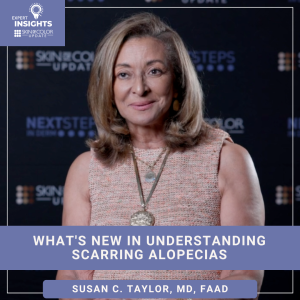
Scarring alopecias require early, effective treatment to stop progression and prevent further permanent hair loss. In an interview with Next Steps in Derm, in partnership with Skin of Color Update, Susan C. Taylor, MD, FAAD, shares the latest research in the understanding of scarring alopecias and how that’s influencing the therapeutic pipeline. Dr. Taylor, the Bernett Johnson Endowed Professor of Dermatology at the University of Pennsylvania Perelman School of Medicine, outlines current and future treatments, including JAK inhibitors, metformin, and vitamin D.

For more on hair loss, join us on Saturday, June 27, for Hair and Scalp Disorders: The Rx Pad and Beyond, a virtual, one-day conference. The program provides a full-spectrum perspective on hair and scalp management, from diagnosis to therapeutics to nutrition and lifestyle factors. Led by co-chairs Adam Friedman, MD, and Amy McMichael, MD, every session emphasizes practical tools, decision-making, and real-world implementation. Register today!

Scarring Alopecias in Patients With Skin of Color – From SOCU 2024

By Sessions

scarring alopecias

At Skin of Color Update 2024, Susan Taylor, MD, FAAD, delivered an expert overview on diagnosing and treating scarring alopecias in patients with skin of color. Her talk emphasized the unique clinical presentations, dermoscopic features, comorbidities, and culturally sensitive care needed to optimize outcomes in this underserved population.

Key Conditions Covered:

  1. Central Centrifugal Cicatricial Alopecia (CCCA)
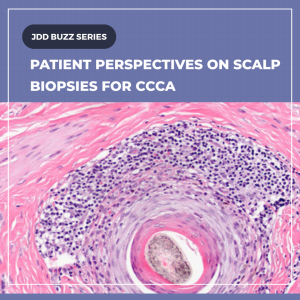
    Most common in women of African descent, CCCA typically affects the vertex scalp but may also appear in atypical patterns. Men are often underdiagnosed due to its similarity to androgenetic alopecia.
  • Dermoscopic clues include peripilar white halos, pinpoint white dots, honeycomb pigmentation, and a “starry sky” pattern.
  • CCCA is associated with systemic comorbidities such as diabetes, hypertension, obesity, and even breast cancer.
  1. Lichen Planopilaris (LPP)
    LPP causes scarring hair loss with perifollicular erythema and scaling, and can vary in pattern and speed of progression.
  • Dermoscopic features include perifollicular hyperkeratosis and depigmented scarred plaques.
  • Dr. Taylor noted that scalp burning (rather than itching) is a distinguishing symptom, and emphasized examining the skin, nails, and mucosa for related lichen planus involvement.
  1. Frontal Fibrosing Alopecia (FFA)
    A variant of LPP, FFA commonly affects postmenopausal women but is increasingly recognized in men.
  • Presents as band-like anterior hairline recession, often with eyebrow loss or facial pigmentation changes.
  • Dermoscopic signs include the “lonely hair” sign and perifollicular erythema.
  • Dr. Taylor highlighted potential links to actinic damage and sunscreen or hair product allergens, recommending patch testing in select cases.
  1. Traction Alopecia (TA)
    TA results from chronic tension on the hair, often due to tight hairstyles like braids or extensions.
  • Early recognition is critical to prevent permanent loss.
  • Dermoscopic features include the “fringe sign,” broken hairs, hair casts, and the “flambeau sign.”
  • Dr. Taylor urged clinicians to take thorough hairstyling histories and counsel patients on protective styling to prevent or reverse damage.

Conclusion:

Dr. Taylor’s presentation provided a comprehensive, culturally attuned framework for diagnosing and treating scarring alopecias in patients with skin of color. She emphasized the use of dermoscopy, early intervention, and awareness of comorbidities and lifestyle factors to improve care. Her insights reinforced the need for personalized and informed dermatologic approaches to better serve this frequently overlooked patient group.

This session summary was written by Dr. Nidhi Shah and published on Next Steps in Derm.

Register for Skin of Color Update for more insights from Dr. Susan Taylor.