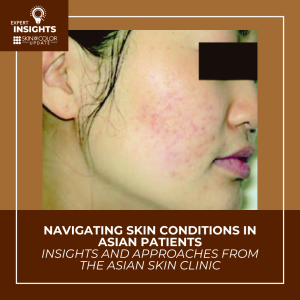
Here’s a summary of key clinical pearls from the Skin of Color Update lecture by Hye Jin (Leah) Chung, MD, MMSc, FAAD, on managing dermatologic conditions in Asian patients:
- Asian skin: higher ceramide content but greater propensity for reactivity → prioritize efficacy while minimizing irritation and PIH.
- Melasma: emphasize photoprotection (tinted sunscreens to block visible/blue light) and gentler topicals (azelaic acid, kojic acid, topical TXA) over irritant triple combinations or cysteamine.
- Oral tranexamic acid (TXA): Dr. Chung’s protocol — 325 mg BID × 3 months, then 325 mg daily × 3 months, then 6‑month drug holiday. Obtain thorough history and baseline thrombophilia testing (protein C/S, factor V Leiden, lupus anticoagulant, anticardiolipin antibodies) before initiation.
- Lasers and pigment: low‑fluence Q‑switched or picosecond Nd:YAG for subcellular photothermolysis; consider picosecond/Q‑switched for deep dermal pigment (ABNOM). 1927 nm can help PIH via controlled epidermal/papillary dermal coagulation.
- Scars: CROSS with TCA for ice‑pick scars; consider ablative CO₂ for papular scars (or needle + electrosurgery where laser unavailable).
- Device safety: favor microneedling, fractional RF microneedling, and fractional picosecond modalities; use high‑energy/low‑density settings if performing fractional ablative/nonablative treatments to reduce PIH risk.
The write-up was written by Jay Nguyen, DO, and posted to Next Steps in Derm.
