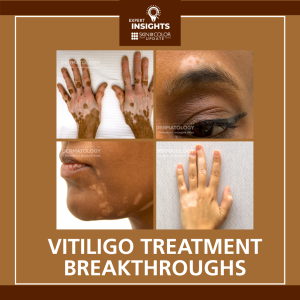
At Skin of Color Update, Pearl E. Grimes, MD, FAAD, shared the latest breakthroughs in vitiligo treatment.
Vitiligo remains one of the most emotionally and therapeutically challenging conditions in dermatology. It’s a disease that patients cannot hide, making its impact deeply personal and public. Contrary to common misconceptions, vitiligo affects all racial groups equally, not just African Americans.
A recent international survey highlighted the profound psychological burden of vitiligo. Patients reported increased rates of anxiety, depression, eating disorders, and PTSD. The burden is especially high among African American patients, those with facial involvement, and those with more than 5% body surface area affected.
Dr. Grimes discussed factors that influence the success of repigmentation:
- Body Site: The face and neck respond best to treatment, while the hands remain the most resistant.
- Age: Children tend to have better outcomes.
- Duration of Therapy: Patients should be counseled that treatment requires several months of commitment. Be patient!
- Lesional White Hairs: Areas with white or gray hairs are less likely to respond.
- Trichrome Lesions: These are more resistant to therapy.
Vitiligo management should focus on three main goals: reducing oxidative stress, modulating the immune response, and stimulating melanocyte growth. Dr. Grimes discussed multiple treatment approaches:
- Oral Minipulse Dexamethasone: 2–4 mg for two consecutive days every week, typically for about six weeks.
- Narrowband UVB (NB-UVB): Administered 2–3 times per week, effective for both stabilization and repigmentation.
- Vitamin D: Deficiency is common, especially in African American patients and those with vitiligo. Dr. Grimes recommends screening and supplementing all patients.
- Emerging Therapies: These include JAK inhibitors (alone or combined with NB-UVB), afamelanotide, aryl hydrocarbon receptor agonists, WNT pathway agonists, and even metformin.
- Topical therapies: Both topical corticosteroids and calcineurin inhibitors are equally effective, with tacrolimus offering a favorable side-effect profile. Topical ruxolitinib can be considered a first-line agent. Dr. Grimes emphasized that patients may continue to see improvement beyond 24 weeks, so persistence is key!
- At-home NB-UVB devices have been available for over 20 years and are effective alternatives to in-office treatments.
As far as new medications:
- Ritlecitinib, Povorcitinib, Upadacitinib, Baricitinib: There is significant positive data to support the use of these oral JAK inhibitors.
- Combination Therapy: Best results are seen when oral agents are combined with NB-UVB.
- Afamelanotide + NB-UVB: This combination accelerates repigmentation compared to NB-UVB alone.
Dr. Grimes predicts that the future of vitiligo treatment will rely on combination therapies. For example, using JAK inhibitors to control inflammation and agents like afamelanotide to stimulate melanocyte growth.
Vitiligo management is rapidly evolving, with new therapies offering hope for better outcomes, especially for patients with skin of color. A personalized, persistent, and multi-modal approach is key to optimizing results.
This information was presented at the 2025 Skin of Color Update conference by Pearl E. Grimes, MD, FAAD. The above highlights from this lecture were written and compiled by Jay Nguyen, DO.
